Quick Answer: Wood decking costs less upfront but requires ongoing maintenance and may not hold up well against Syracuse's harsh winters. Composite decking costs more initially but lasts longer, needs minimal upkeep, and handles freeze-thaw cycles better—making it the smarter long-term investment for most Syracuse homeowners.
Choosing the right decking material is one of the most important decisions you'll make for your backyard. Get it right, and you'll have an outdoor space you love for decades. Get it wrong, and you could be dealing with warped boards, rot, or splinters just a few years down the road.
For homeowners in Central New York, this decision comes with an added layer of complexity. Syracuse is no stranger to brutal winters, heavy snowfall, and the kind of freeze-thaw cycles that can wreak havoc on outdoor structures. The material that works beautifully in a mild Southern climate may not hold up nearly as well here.
This guide breaks down the key differences between wood and composite decking—covering cost, durability, maintenance, and aesthetics—so you can make a confident, informed decision for your Syracuse backyard.
Wood decking is exactly what it sounds like: planks milled from natural timber, typically pressure-treated pine, cedar, or redwood. Composite decking, on the other hand, is an engineered product made from a blend of recycled wood fibers and plastic. It's designed to mimic the look of wood while offering greater resistance to moisture, pests, and general wear.
Both materials have their merits. But they perform very differently over time—especially in a climate like Syracuse's.
Syracuse averages over 120 inches of snowfall per year, making it one of the snowiest cities in the United States. That kind of weather exposure puts serious stress on outdoor structures.
Natural wood is vulnerable to moisture absorption. When water seeps into wood fibers and then freezes, it expands—causing cracking, warping, and eventual rot. Pressure-treated lumber has some resistance to decay, but it still requires annual sealing or staining to stay protected. Cedar and redwood are naturally more resistant, but they're also more expensive and still demand regular upkeep.
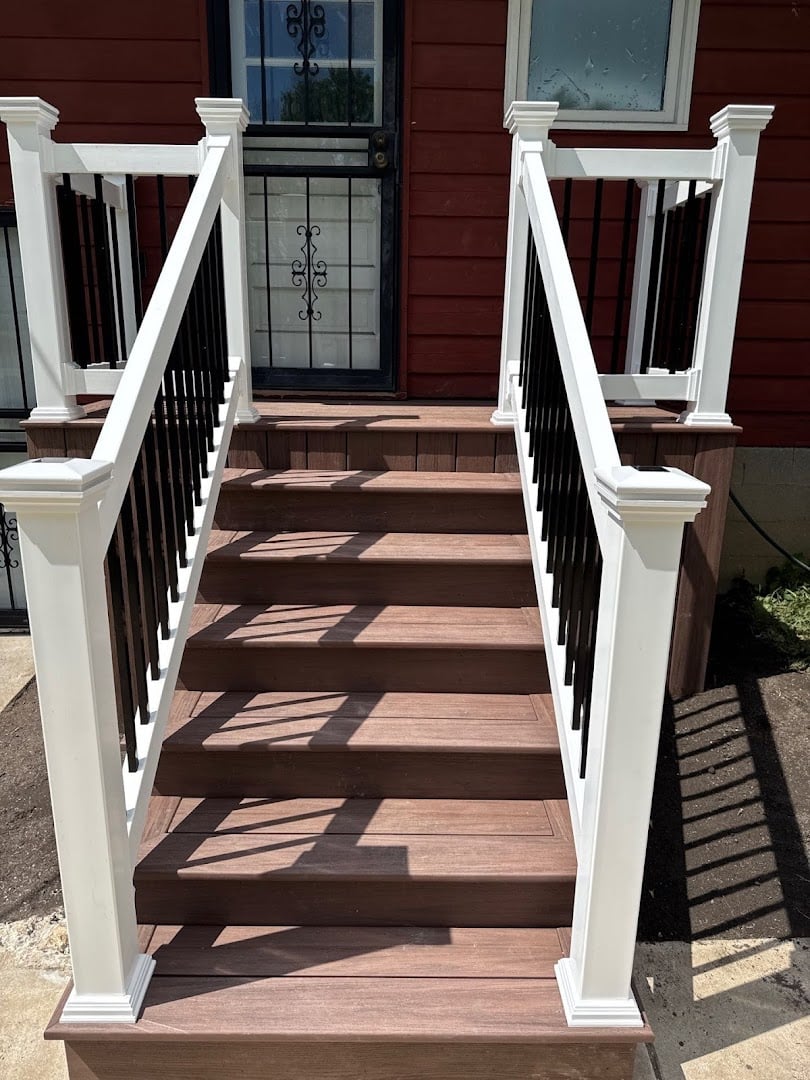
Composite deck installation handles Syracuse winters significantly better. The plastic component in composite materials repels water, which means freeze-thaw cycles cause far less damage. Quality composite boards are also resistant to mold, mildew, and insect damage—common issues in Central New York's humid spring and fall seasons.
Bottom line: For Syracuse homeowners who want a deck that can handle the elements without constant intervention, composite decking has a clear durability advantage.
Cost is often the deciding factor—and it helps to look at both the short-term and long-term picture.
Wood decking typically costs between $15 and $25 per square foot installed, depending on the wood species and complexity of the project. Pressure-treated pine sits at the lower end; cedar and redwood are higher.
Composite deck installation generally runs between $25 and $45 per square foot installed. The higher upfront cost reflects both the material itself and the expertise required to install it correctly.
Here's where the math shifts, though. Wood decks require annual or biannual maintenance—staining, sealing, sanding, and occasional board replacement. Over a 10-year period, those costs can add up to thousands of dollars. Composite decking requires little more than occasional cleaning with soap and water. When you factor in lifetime cost of ownership, composite often comes out ahead.
If weekend mornings mean coffee on the deck rather than crawling around with a paintbrush, composite is likely the better fit.
Wood maintenance checklist (annual):
Composite maintenance checklist:
The difference is substantial. A wood deck demands consistent attention to stay safe and looking good. A composite deck, once installed correctly, largely takes care of itself.
This one is more subjective—but worth addressing honestly.
Natural wood has a warmth and authenticity that's hard to replicate. The grain patterns, the color variations, and the way weathered cedar smells on a warm summer evening are genuinely appealing. For homeowners who prioritize that classic, organic aesthetic, wood delivers.
Modern composite decking has come a long way, though. Today's products convincingly mimic the look of natural wood, with realistic grain textures and a wide range of color options. Unlike real wood, composite doesn't fade dramatically or turn gray over time (most brands include UV inhibitors). The trade-off is that composite can feel slightly different underfoot—it tends to get warmer in direct sunlight and doesn't have quite the same tactile quality as natural timber.
Many composite decking products are made from recycled materials—reclaimed wood scraps and recycled plastic that would otherwise end up in landfills. From a sustainability standpoint, that's a meaningful advantage.
Wood, particularly FSC-certified lumber, can also be a responsible choice if sourced properly. The concern is that poorly maintained wood decks end up in the trash within 10 to 15 years, whereas a quality composite deck can last 25 to 30 years with minimal waste.
Choose wood if:
Choose composite if:
For most Syracuse NY deck contractor projects, composite decking is the recommendation—especially for homeowners who want a beautiful, functional outdoor space without the annual upkeep. The investment pays off quickly when you account for maintenance savings and the extended lifespan.
The Vinyl Outlet specializes in composite deck installation across the Syracuse area, helping homeowners choose the right materials and build outdoor spaces built to last. Whether you're leaning toward the warmth of natural wood or the durability of composite, our team can walk you through every option.
Contact The Vinyl Outlet today for a free consultation and let's build something you'll love for years to come.
---
Is composite decking worth the higher upfront cost in Syracuse?
For most Syracuse homeowners, yes. The combination of low maintenance requirements and strong performance in freeze-thaw conditions means composite decking typically costs less over a 10- to 15-year period than a wood deck that needs annual staining, sealing, and repairs.
How long does a composite deck last compared to a wood deck?
A quality composite deck can last 25 to 30 years with minimal maintenance. A well-maintained wood deck typically lasts 15 to 20 years, though neglected wood decks can deteriorate significantly sooner—especially in climates with harsh winters like Syracuse.
Does composite decking get too hot in the summer?
Composite decking can get warmer than natural wood under direct sunlight. However, many premium composite brands now include heat-resistant technology to minimize this effect. Strategic placement of shade structures or pergolas can also help manage surface temperature.
Can I install composite decking myself, or do I need a professional?
While DIY installation is possible, composite decking requires precise fastening techniques and proper ventilation to perform correctly. Mistakes during installation can lead to warping or voided warranties. Working with an experienced Syracuse, NY deck contractor ensures the job is done right the first time.
What composite decking brands does The Vinyl Outlet work with?
The Vinyl Outlet works with a range of leading composite decking brands. Contact our team directly for current product availability and recommendations based on your project and budget.
Straight answers to the questions The Vinyl Outlet customers ask most often before booking a quote.